
10 incredible historical facts about hunting that you didn't know
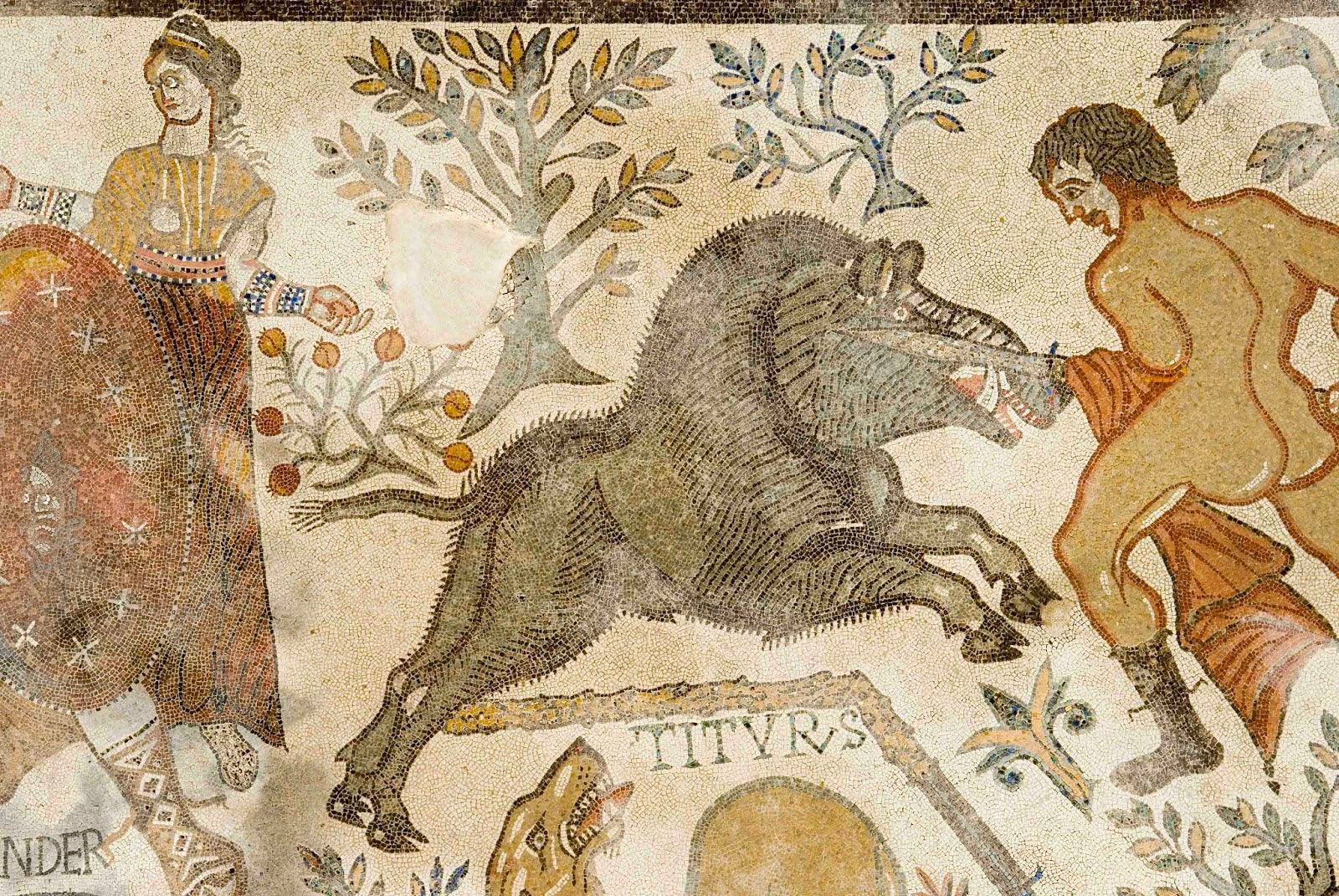
Hunting has been part of humanity since its beginnings, and has accompanied man throughout his evolution.
Although it has often been criminalized, it is important to highlight the importance of hunting throughout history.
Although we often see hunting as our way of life and passion nowadays, this hobby has been changing a lot since it was first practiced.
We at Young Wild Hunters want to share 10 facts about hunting that you may not have known before.
Women were already hunters in prehistoric times.
There is a false belief that at the beginning of mankind, man was the only one who went out to hunt for food. This is a complete myth.
In 2020, archaeologists in Peru found the remains of a girl between 17 and 19 years old buried about 8,000 years ago along with her weapons shows that hunting large animals was not just a prehistoric man thing. It is believed that these weapons were used to hunt tarucas, a species of Andean deer.
The women hunters in this area were tough adventurers, as conditions at the time were very difficult. The body was found at an altitude of more than 3,000 meters, and it is estimated that in the cold seasons of that time temperatures dropped to -20º.

45,000 years ago in the Arctic they were already hunting... MAMMOTS!
In 2012, scientists from the Institute of History of Material Culture in St. Petersburg found the first evidence of human life in the Arctic. It was a mammoth calf about 15 years old, whose remains indicate that it was hunted with a spear by humans who inhabited this inhospitable area of the planet.
This discovery is proof that the expansion of human beings around the planet was largely due to the need to hunt for food and survival, and that at that time they could already face large animals such as mammoths, bison or wolves.

The first dog bred specifically for hunting was the Saluki in ancient Egypt.
The Saluki is graphically depicted in Egyptian tombs from 2100 BC and it is estimated that its body was often mummified like the bodies of the Pharaohs.
The Saluki has historically served as a retriever, a fast hunting dog. Saluki dogs slept with their owners in tents to protect them from the heat of the day and the cold of the night.


In Rome, hunting was considered a lowly activity.
This happened at the time of the Republic of Rome. At that time the art of hunting was not treated as such, but as a mere act of obtaining food for the family. This activity was seen as vulgar and they sent their slaves to carry out the hunting activity.
From a food and survival point of view, it was normal that nobles and royalty did not want to expose themselves to danger and left their palaces in the big cities.
With the passing of the centuries, this situation was reversed, and the nobles began to go out into the countryside to hunt for fun. This was reflected in the "Venatio", which were shows that took place in coliseums and theaters in which a man faced an animal to hunt it.

Hunting with falcons became popular in Spain thanks to Al-Andalus.
The numerous sources and hunting images in Hispano-Muslim art reflect a great fondness for hunting, demonstrating that the Umayyad sovereigns of al-Andalus took on the hunting tradition of antiquity and the Eastern courts, thus coinciding with the Christian kings of the Middle Ages in a pastime that was one of the means of expression of sovereign power.
The Umayyad caliphs in the East were great falconers and falconry reached great refinement. Exorbitant expenses, gifts, personal attention to the birds was something normal in the Umayyad and Eastern Abbasid courts, but also in other Muslim courts of the world.
And so it was introduced into the Iberian Peninsula and practiced in the courts of al-Andalus. The trained birds of prey became insignia that demonstrated the power and position of those who possessed them.

The arquebus, the first firearm used for hunting.
Although the first writings that mention this "cannon" were in the year 1482, it was not until the 16th century that this weapon was used for hunting.
The development and popularization of the arquebus in the military sphere gave life to a new stage in the development of the hunting world that practically reaches the present day. It is a crude weapon with a rectilinear design of approximately one meter in length. In its upper part it was provided with a kind of mouth or opening that allowed the barrel to be primed. Due to its manufacturing cost, it was only used by the better positioned or dominant social classes of the time.
Its main disadvantages were that since the wick had to be always lit, the animals spotted the hunter, especially at hours of low light.
In addition, the humidity prevented a good ignition of the gunpowder and it could not be used when it rained and its weight was considerable, so in most cases the hunter had to be stationed waiting for the animals.

The bison was almost exterminated as a result of the "Indian problem".
This majestic animal has been a symbol of the United States since its founding. But like all history, it has its light and dark sides.
The Native Americans had hunted buffalo since time immemorial, and when the white man arrived on the American continent he was aware of the importance of this species for the people who lived there.
The solution to gaining ground on these Native American communities during the wars they fought was to exterminate every type of food source. This caused the bison population to drop from millions to just a few hundred in a matter of 200 years,
The Sioux, Kiowa or Comanche ruled the great plains of the interior of the United States with an economy (and a culture) built on buffalo. By October 1868, Philip Sheridan, the military officer in charge of pacifying the Great Plains, had it clear: his best asset to control the Native Americans was to "make them poor by destroying their resources and then lock them up on their reservations".


Hitler was...an animalist.
This was the astonishing claim made by Nazi propaganda minister Himler Gobbels. In his writings, he defined Hitler as "a vegetarian who hated the religions of Judaism and Christianity largely because of the ethical distinction these religions make between the value of human life and the value of the life of other animals." In addition, he also recounted the intention to ban slaughterhouses in the German Reich after the conclusion of World War II.
The government also banned animal traps and imposed severe restrictions on hunting. It also banned the consumption of lobsters and crabs. Hitler is even said to have once sent a fisherman to a concentration camp for cutting up a frog with bait.
On July 3, 1934, a law Das Reichsjagdgesetz (Reich Hunting Act) was enacted to limit hunting. The act also created the German Hunting Society with the mission to educate the hunting community on ethical hunting.

Hunting kept alive an important part of the Spanish population during the post-war period.
In the period between 1939 and 1951, Spain was plunged into a deep food crisis that caused the death of thousands of people. The main infrastructures necessary to feed the population were damaged or destroyed as a consequence of the Civil War.
In rural Spain, often dependent on the food industries for survival, there was no alternative but to go out into the countryside to hunt in order to bring something to eat to the table.
This hunting was mostly unregulated and furtive, but necessary for the survival of thousands of people during those dates. Certain recipes have survived from this period and are now considered traditional in Spanish gastronomy.

Since the 1950s, legal hunting has been the main defender of African wildlife against poaching.
And although it may seem contradictory, it is so. Thanks to the regulated hunting ordinances that came after the independence of the former colonies, the fight against poaching is a very important issue in these territories.
The economic benefit of hunting in these countries means that the population of species such as elephants, rhinoceroses or big cats can be defended in natural parks.
A large part of the money provided by legal hunting goes to the workers and security guards who watch over these areas, the fight against corruption and the training and awareness of the fauna and flora of society.

