
Hunting videos and photographs, which we use in our documentaries
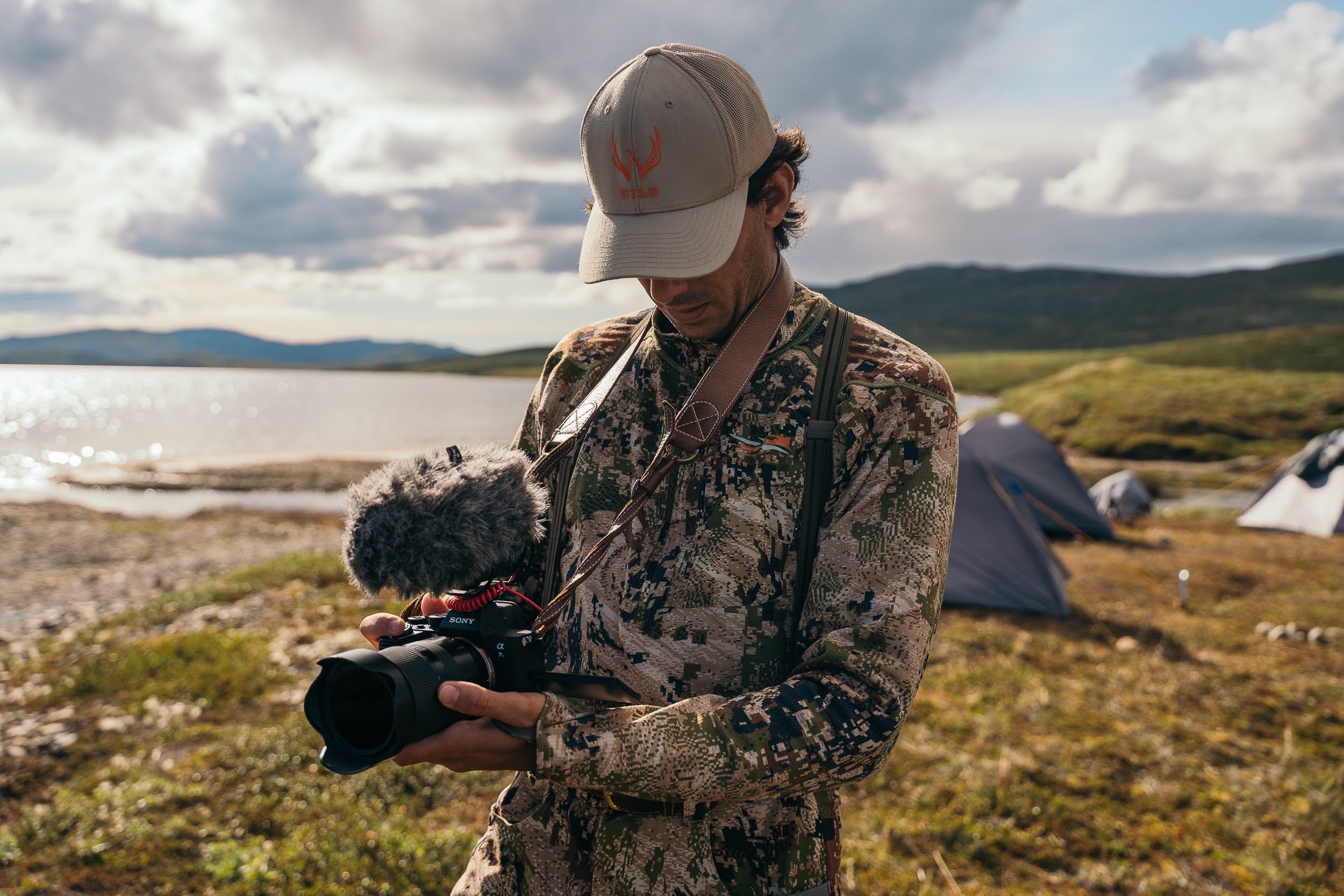
Filming a hunt isn't just about capturing the moment. At Young Wild Hunters , we believe that documenting a hunt should reflect everything surrounding it: the preparation, the waiting, the tension, the respect for the animal, and the connection with nature. Behind every scene, there's much more than a camera; there's planning, knowledge of the environment, and a deep passion for what we do.
In this article we tell you how we film our hunts, what equipment we use, how we work in the field and also how we complement the videos with wildlife photography.
Main camera: Lumix S5 II + Sigma 24-70mm f/2.8
The foundation of our video production is the Lumix S5 II , a hybrid mirrorless camera that delivers the professional quality we seek without sacrificing portability. This camera records in 4K at 60fps , ideal for capturing smooth action, and its in-body image stabilization system is essential when filming on the move over uneven terrain.
We paired it with the Sigma 24-70mm f/2.8 lens , an all-around lens that allows us to quickly adapt the framing, from close-ups of the hunter to wide landscapes. Its constant f/2.8 aperture is key for shooting in low-light conditions, such as the first minutes of dawn, and for achieving that cinematic effect with soft background blur.

The DJI Mavic 2 Pro drone: recording from the sky
Aerial shots have become a visual signature of our videos. They allow us to showcase the terrain and give the viewer a comprehensive view of the hunting grounds. We use the DJI Mavic 2 Pro , a drone with a 1-inch sensor that delivers excellent image quality even in low-light conditions.
Before each day, we conduct scouting flights to identify key areas, access routes, observation points, and potential escape routes for the animal. We record in DLOG-M profile, which allows for precise color correction in post-production and ensures consistency with the ground camera footage.
We also use ND filters to control exposure during the day, especially when shooting at 25 or 50fps with the shutter speed at 1/50s.

Wildlife photography: Canon EOS R7 + 600mm telephoto lens
When we want to capture the animal, we use the Canon EOS R7 equipped with a 600mm telephoto lens . This combination allows us to work from great distances, ideal for observational photography or for documenting moments before the shot without intruding on the animal's space.
The EOS R7, with its APS-C sensor and advanced autofocus, lets us take silent and precise bursts , even in low light. These images are not only perfect for accompanying our videos, but also for sharing visual content on social media, creating YouTube thumbnails, and preserving unique memories of every outing.

Field assembly and motion recording
Nothing is pre-planned. In a real hunt, there are no replays or second chances. That's why our recording equipment needs to be lightweight, versatile, and quick to deploy. We carry compact tripods , shoulder mounts , and anchor systems that allow us to record even during rapid movements.
The operator moves in coordination with the hunter, always maintaining a safe distance so as not to alert the animal or hinder the hunt. We use waterproof backpacks with padded compartments to protect the equipment from mud, rain, and impacts.
Sound: 50% of the experience
Ambient sound is just as important as the image. In many shots there are no words, only the creaking of a branch, the buzzing of insects, or the wind through the trees. To capture this atmosphere, we use external directional microphones or separate recorders , and in post-production we clean and enhance these sounds so they blend naturally with the image.
We don't add music excessively. Only when it adds emotion or reinforces a transition. The priority is always to maintain the authenticity of the moment.
We don't improvise entirely. Before each recording, we study the terrain, the behavior of the target species, the weather conditions, and the entry and exit routes. This ensures that we can move smoothly, anticipate actions, and not interfere with the natural course of the hunt.
And above all, we film with respect . We neither romanticize nor dramatize. We show hunting as it is: intense, tough, real. Every shot is designed to tell a story, not to get likes.
Over time, we've learned that filming hunting is, in itself, another form of hunting . It demands the same qualities: observation, patience, strategy, and respect for nature. You can see some of our content on our YouTube channel:
Author: María Balletbó