
The barking of the rehala
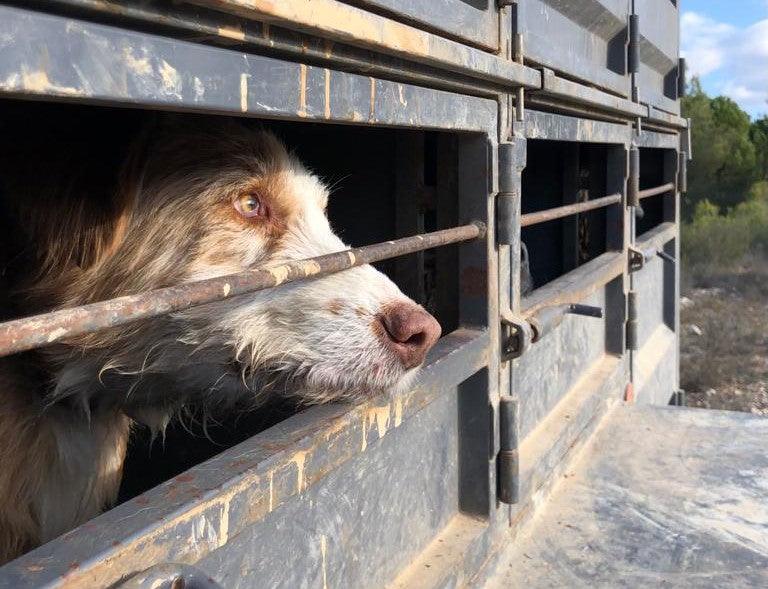
The most practiced type of hunting in Spain is without a doubt hunting, which we talk about in more depth in this blog "La montería española" . But in this section we will specifically give importance to the protagonists of this type of hunting, the rehalero dogs. Both the figure of the dogs and that of the foreman of the rehala, are of vital importance for a successful day, they are the soul of the hunt.
What is the origin of the rehala?
You have to go back to Extremadura in the 14th century to find its beginnings, specifically to the writing of “El libro de la Montería” by Alfonso XI. In this document, there is evidence of more than 200 stories about hunts of especially bear and wild boar, in which the dogs were the protagonists in the spot and were organized as if it were a military battle. The crossbow was the fundamental weapon and until the 16th century there was no change towards the arquebus. In this way, they are more than 700 years of uninterrupted tradition every weekend and holiday of the season.

The shells sound, the batida begins
It all starts on a cold winter morning, the frost is still on the mountain and the rehalero goes to his kennels early to collect the dogs and take them to the hunt. He has already been awake for more than three hours, when he meets for the hunting breakfast with all the hunters. In this meeting, interesting hunting conversations, experiences are exchanged and the emotion and illusion are breathed in the environment.
The draw begins, in which each position is distributed to the hunters, who rush to their jeeps to arrive at the assigned place and wait. Everything seems to be ready for the rehaleros to release.
The release is done with a dog handler who has to know the spot perfectly, the dogs leave anxious for their transport and many of them already smell the prey from kilometers away, the hunt begins. According to the Count of Yebes, writer of "20 years of big game", there are four ways to cover the ground:
- The first, as its name indicates, is starting at one end and ending at the opposite.
- The second consists of placing a main armada dividing the center of the patch and releasing a group of rehalas at one end and another group at the other, these marching towards the meeting or stop, which takes place in the central armada.
- The third, variant of the previous one, consists in that the rehalas do not stop at the meeting, but crossing each other, continue until finishing, respectively where the others ended. With this, you can beat the entire terrain in a perfect way, but it requires a large number of shotguns and dogs, since you have to completely surround yourself and also put an important army in the center.
- Finally, the last one, which can be going all the way around the stain, consists of starting the rehalas at one point and ending there, after having covered the entire surface.
The dogs cover the spot to the sound of the shells and the shouts of "esbarra" made by their foremen. Races and races take place in the bush, with the luck of making the cattle pass in front of the stalls, where the huntsmen make incredible hauls and kill the prey. On other occasions, these races are won by the dogs, who hold the animal until the rehalero arrives to kill it in a fight to protect their dogs.
At the end of the task, the rehalero waits for all the dogs to return to the collection place, and if this is not the case, he does not rest until he finds every last sharer of his precious rehala. After this, it is time to collect the prey, enjoy a traditional meal and exchange the experiences of the day. The dogs, meanwhile, fall asleep in the trailer, hoping again for a hunting weekend.

Composition of a traditional rehala
These dogs are not just any dogs, they must have a series of skills to get the cattle out of the bush and run them to the stalls. They must have a great love of hunting, a very keen sense of smell, the courage to face their prey, persistence until they achieve their goal and bark to warn the other dogs when they find an animal.
These qualities are usually appreciated in certain species of hunting dogs, although it also depends on the criteria of the rehalero, terrain or prey that they want to kill. In this section we will configure an example of a traditional 9-collar rehala:
A spiked collar: Formed by medium-sized hounds, such as the Portuguese or the Andalusian. This dog is a great game hunter, with good winds, light, fast and with great happiness, it is the breed par excellence for the function of finding and lifting game.
Four large size collars: For example, large size Canary or Andalusian hounds. These animals are fast and take long strides to move the cattle from their bed.
Two collars for grip helpers: They are usually mamastinated dogs to help the official grip dogs. They are large dogs with great courage towards prey.
Two gripping dog collars: These dogs hold the prey until the dog handler arrives to finish off the prey with a knife. The predominant races are the Alanos or the Mastiffs. These dogs have great strength and tear the prey, so it is not recommended to have too many, since the prey would not reach the firing points.

To finish this blog we leave this "Open letter to a rehalero friend" extracted from Locos por la caza. In it you can feel more closely the work of the mayoral and his rehala.
Although the one who hunts is proudly called a huntsman, he always knows that hunting is possible thanks to the rehalero.
Although the origin of the hunt is disputed, it seems that it dates back to the late Middle Ages, and always in Spain, there is a factor that makes the hunt remain faithful to its origin and without a doubt, that is the dogs and the one that commands them, the rehalero.
As if he were a conductor, he directs the dogs and moves the game, looking for the forest to move and the pasture to be filled with crazy races, which with luck, the huntsman will transform into sets.
To be a rehalero, you have to be worth it, and in my opinion, you are born although there are those who say that you can learn. Tireless wanderers, who open paths where there are none, who walk between the muzzles of loaded gun barrels, and launch their rehalas to chase and capture wild boars and cattle. On many occasions they finish off dangerous sets, looking for the safety of their dogs, facing and seeing death in the first person, getting the most out of their dogs, who have such devotion to their masters, that at their cry, they do not hesitate to jump off a precipice. or a riot with a knife handing out knives indiscriminately.
There are distant, grim and tough... there are small, joking and foul-mouthed, but all of them, full of courage, dagger in hand, are capable of killing, or carrying their wounded dog in their arms. More than one has raised my heart rate to the cry of "There goes the pig!", or "Come down a very big pig!".
From here, rehalero friend, I thank you, for making the hunting feeling possible. Let no one turn off your voice, let no one doubt your love for your dogs, That the Spanish hunting owes everything to the rehalero gentleman.

Work by Jorge Manzanares, for more paintings visit our website
Author: María Balletbó