Skip to content

POR ALTA DEMANDA LOS PEDIDOS PUEDEN TARDAR MÁS

AMPLIAMOS PLAZO DE DEVOLUCIONES HASTA EL 31 DE ENERO

Cart

Your cart is empty

Wild footprints and traces
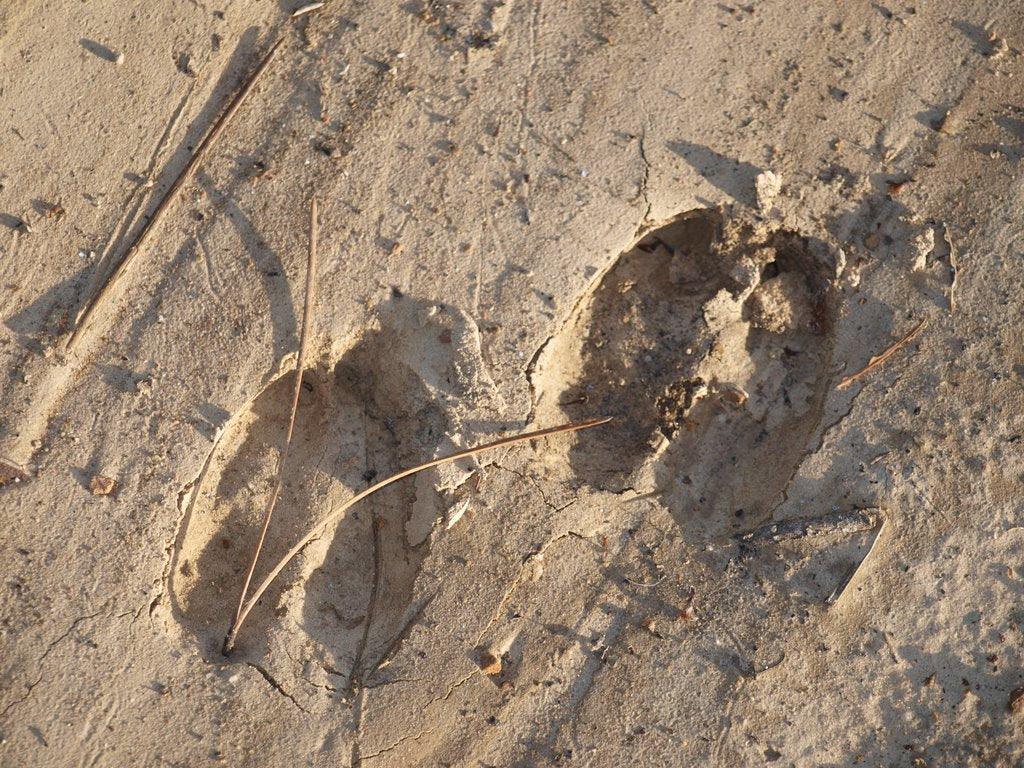
Tracks and other traces can provide us with a lot of information about wild animals. Moreover, with the necessary knowledge (and provided that the signs are sufficiently continuous and clear), much more information can be extracted than just the identification of the species in question, such as: the sex of the animal; its state of health; its diet (and study its seasonality); establish indices of abundance and density, and even individualise a specific specimen (which can allow us to determine its home range, which areas it frequents most, its timetables, etc.). In this blog we will show you how to identify the tracks of the seven large game species of the Iberian Peninsula.

1. Wild boar

The footprint of this ungulate can measure up to eight centimetres and consists of four hooves grouped symmetrically. In front are the two main hooves, which are always marked, and the hind hooves or claws are two secondary ones. But these can vary depending on several factors:

Speed: the marking will change, as in running it is more open with the hooves separated.

Age: the first characteristic is that logically the footprint of the young boar will be smaller. In addition, it will have suffered less wear, so it is more pointed.

The main difference with other ungulates is that the marks of cervids are not joined at the base, whereas those of the wild boar are.

2. Roe deer
The footprint of a roe deer can measure a maximum of six centimetres, as it is the smallest cervid in Europe. They are very small and narrow marks in the shape of an inverted heart. If the ground is soft or wet, we can sometimes see two dots marked behind the main footprint, which is the rear hoof.
Speed: if they are very closed, it means that they are calm and more open, because they are jumping.

3. Deer
Deer tracks have a size of seven centimetres and are similar to a drop of water. In addition, if they are calm, they usually rest their hind feet in the same place as their front feet. The sole does not occupy more than a third of the sole, which is the main difference compared to fallow deer. When the rear hooves are marked on very soft ground, they are placed behind the main hooves, aligned in a rectangle, unlike the wild boar, where they are aligned in a trapezoid.

Speed: When running away, it combines galloping and jumping, in this case the secondary hooves are marked.

4. Fallow deer
These are tracks that can easily be confused with those of a young deer or doe, due to their size of seven centimetres in males and five centimetres in females. They are triangular tracks and the sole can occupy half of the hoof. Unlike deer, which do not exceed one third of the sole.

5. Ibex
Marks two seven centimetre hooves, rounded, narrower and sharper at the front than at the back. The difference with cervids is that the hoof prints are marked only on the outer edge, deer also mark the inner edge. The secondary hooves never leave any impression, as they are very high up.

6. Mouflon
The tips are set wide apart and the secondary hooves leave no mark. It is usually about five centimetres long. It is very similar to the hoof print of sheep, although they are generally more pointed. The forelegs step with open hooves and the hind feet are closed.

7.Chamois
This is a footprint that does not exceed five centimetres and has a separation between the hooves of at least one centimetre. The hind hooves only leave a mark when jumping or in the snow. In well-marked marks, the pads are clearly differentiated.

Author: María Balletbó

Related content

Is hunting misunderstood in the media?
june 20, 2025
Read article ->
Spanish hunters set the European course in the study of the quail
june 18, 2025
Read article ->
Hunting videos and photographs, which we use in our documentaries
june 13, 2025
Read article ->
A resounding success for hunting at Narcenatur 2025
june 11, 2025
Read article ->
Everything you need to know to make your puppy a good hunting dog
june 6, 2025
Read article ->
Hunting consolidates its position as the third sport with the most registered members in Spain
may 28, 2025
Read article ->
How to remove a tick
may 23, 2025
Read article ->
Hunting generates more than 10 billion euros annually and supports almost 200,000 jobs in Spain.
may 7, 2025
Read article ->
5 perfect gifts for Mother's Day
april 28, 2025
Read article ->
The Spanish Roe Deer Association launches a new edition of the Corcino Project with a prize draw included
april 24, 2025
Read article ->
The FAC offers free hunting for young people
april 23, 2025
Read article ->
How to know the age of a roe deer
april 11, 2025
Read article ->
Wild Garoz: A Hunting and Taxidermy Adventure
april 4, 2025
Read article ->
Chaotic start to the season in Castile and León with the digital seal
april 2, 2025
Read article ->
Did you know you can use a red dot sight on top of your scope?
march 31, 2025
Read article ->
How to make roe deer burgers?
march 28, 2025
Read article ->
Can hunting rifles be used on shooting ranges?
march 26, 2025
Read article ->
The Return of Wolf Hunting in Spain
march 21, 2025
Read article ->
Cinegética+SCI 2025 kicks off: The big event for hunting and nature lovers
march 20, 2025
Read article ->
Castile and León is implementing the digital seal. How does it work?
march 19, 2025
Read article ->
10 Must-Haves for Roe Deer Season
march 14, 2025
Read article ->
Spain will be able to hunt European turtle doves this 2025/2026 season.
march 12, 2025
Read article ->
Is a red dot sight worth it for a shotgun?
march 10, 2025
Read article ->
How to get started in beekeeping
march 7, 2025
Read article ->
The hunting auction in Gredos breaks a record again
march 5, 2025
Read article ->
What optics should I use for big game hunting?
march 3, 2025
Read article ->
Information about the Gaim hunting simulator
february 28, 2025
Read article ->
3 Uncommon Roe Deer Calibers
february 21, 2025
Read article ->
The quail will continue to be a game species in Spain.
february 19, 2025
Read article ->
Karelian bears, the northern wild boar dog breed
february 14, 2025
Read article ->
Success at the 6th Roe Deer Hunting Day in Burgos, organized by the ACE
february 12, 2025
Read article ->
Top 5 Best Valentine's Day Gifts
february 7, 2025
Read article ->
Do you want to participate in the Zorzales Project?
february 5, 2025
Read article ->
Hunting returns to Cabañeros
january 29, 2025
Read article ->
Rutting deer hunting in Spain
january 24, 2025
Read article ->
Llerena crowns the new Spanish falconry champions in an exciting championship
january 22, 2025
Read article ->
Amendments to the Animal Welfare Law in Madrid
january 17, 2025
Read article ->
Excopesa, New Official Distributor of Pard in Spain and Portugal
january 15, 2025
Read article ->
Southern Hunts and Northern Hunts
january 10, 2025
Read article ->
Controversy in Sweden over wolf hunting and wolf hunting in Spain
january 8, 2025
Read article ->
Improvements, poaching, and hunting plan 2025/2026 in Gredos
december 11, 2024
Read article ->
The impact of the mongoose on small game
december 4, 2024
Read article ->
Don't have plans for this weekend? A campaign is being held to promote the consumption of game meat.
november 27, 2024
Read article ->
13th Annual Monterías of the Royal Club of Hunters: A weekend to remember
november 22, 2024
Read article ->
Pablo Ortega presents La Mirada, a short story from the countryside: a tale that unites nature, values, and solidarity.
november 19, 2024
Read article ->
Trichinosis in wild boar: where should samples be tested?
november 15, 2024
Read article ->
Catalonia promotes game meat consumption in response to the wild boar overpopulation emergency
november 13, 2024
Read article ->
Wild Menor, YWH's first small game hunting series
november 8, 2024
Read article ->
Hunting wild boars in El Encinarejo
october 30, 2024
Read article ->
The European turtle dove: a success story of adaptive game management
october 25, 2024
Read article ->