
Game meat conquers haute cuisine
“Game meat is the future.” This was the emphatic statement made by Alberto Lozano, a chef from Albacete, during his presentation at the First International Congress of Game Gastronomy (CIGAC), recently held in Almagro (Ciudad Real). His vision stems not from a passing fad, but from experience: in the far north of the planet, in the Norwegian archipelago of Svalbard, where he works at the Huset restaurant, hunting is not a choice, it is survival.
“Everything there is extreme, and to hunt you have to be a kind of superhero,” Lozano explains. In his larder, he keeps 45 reindeer and nearly 800 ptarmigans, even using the seeds they find in their crops as a crunchy snack. He also cooks with seal, “the pig of the Arctic,” making everything from cured lardo to a surprising umami-flavored garum , reminiscent of soy sauce.
But you don't need to travel to the Arctic to find advocates for this product. In Spain, game is conquering the most prestigious kitchens. Nacho Manzano, chef of Casa Marcial (the newest three-Michelin-starred restaurant in Asturias), passionately defends its use: “When you prepare game, the kitchen smells better: fragrant, authentic. It's a natural product, without intramuscular fat, that's very easy to digest. You're cooking the land, the landscape, the season.”
Iván Cerdeño, at Cigarral del Ángel (Toledo), also focuses on meats like hare, red-legged partridge, mouflon, and wild boar. “They have a primal flavor. Freezing and marinating are key to treating them properly and bringing out their full potential.”
From Germany, Sebastian Frank (Horváth, Berlin) lamented the contradiction in current gastronomic discourse: sustainability is discussed, yet beef consumption remains massive. “Hunting is more natural, because animals don't need food brought to them: they find it themselves.”
In Italy, Mateo Vergine, chef of the Grow restaurant, makes venison salami and dried venison shoulder as a symbol of an ancestral and original cuisine.
For his part, the president of Asiccaza, José María Gallardo, emphasized the importance of promoting the consumption of game meat in Spain: “Only a small fraction of the game hunted is used. Choosing this meat means choosing the environment, ecological balance, and rural development.”
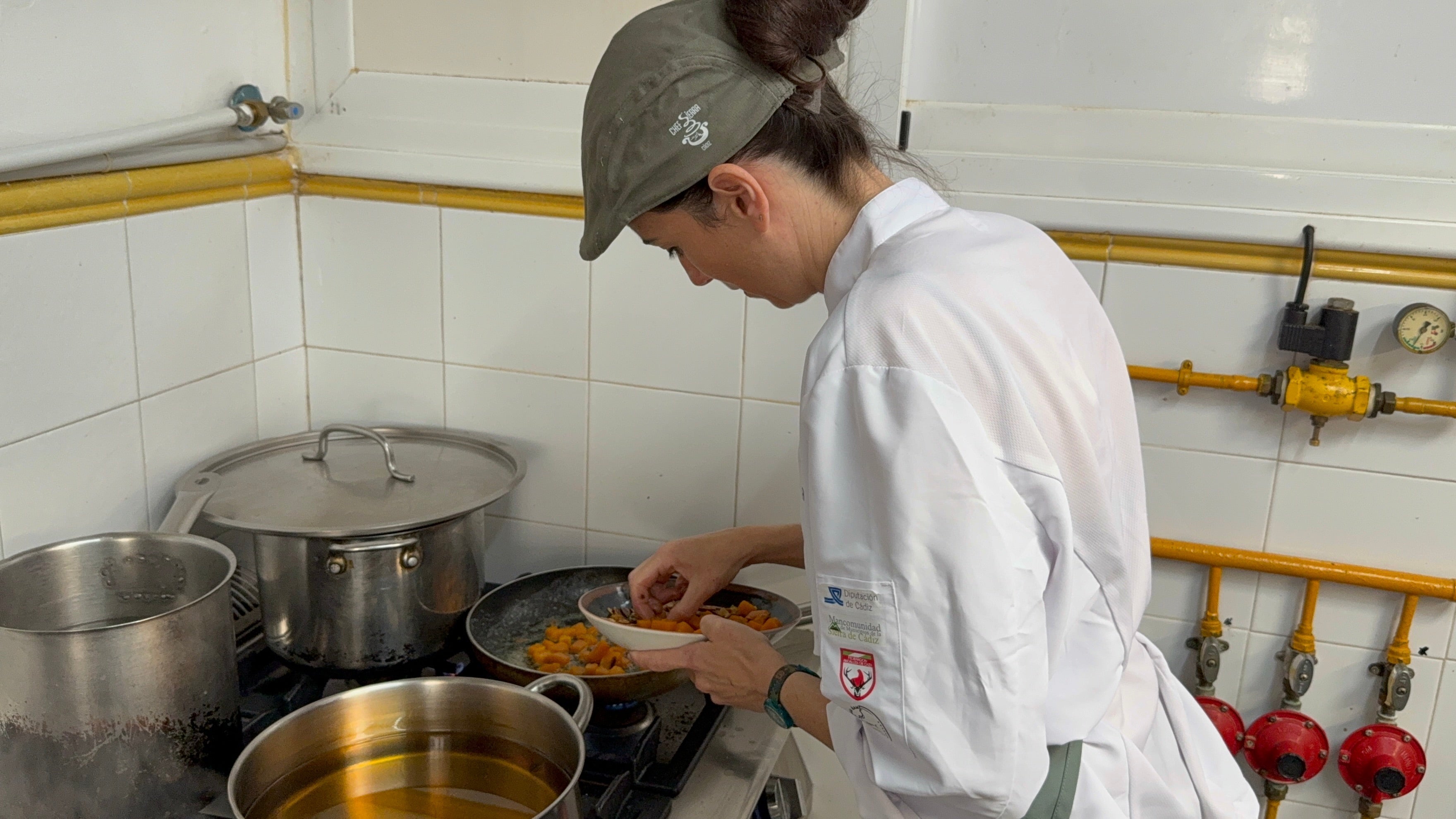
A commitment that is already translating into talent and recognition. In the final of the Chef Sierra de Cádiz competition, held at the Hacienda El Rosalejo with the support of the Andalusian Hunting Federation, game meat was the star. Chefs Miguel Castillo ( El Mirador de Setenil ) and Manu Conde ( Catering La Serrana ) emerged as winners in the Tradition and Innovation categories, respectively, highlighting a product that is “ethical, sustainable, locally sourced, and of exceptional gastronomic value.”

In the words of Dr. Antonio Escribano, a nutrition specialist: “Game meat has a superior amino acid profile, more bioavailable, and is comparable in protein to red meat, but healthier.” A wild, free protein that has accompanied humankind since its origins and that today returns, stronger than ever, to kitchens that look to the future.